
What to Expect During an Aircraft Annual Inspection
Every aircraft operating under FAA Part 91 must undergo an annual inspection every 12 calendar months. Skipping or delaying this required check grounds your plane and puts safety at risk. For owners in East Texas, a thorough understanding of the inspection process helps you budget for labor, plan for parts replacement, and flag potential discrepancies before the hangar door opens.
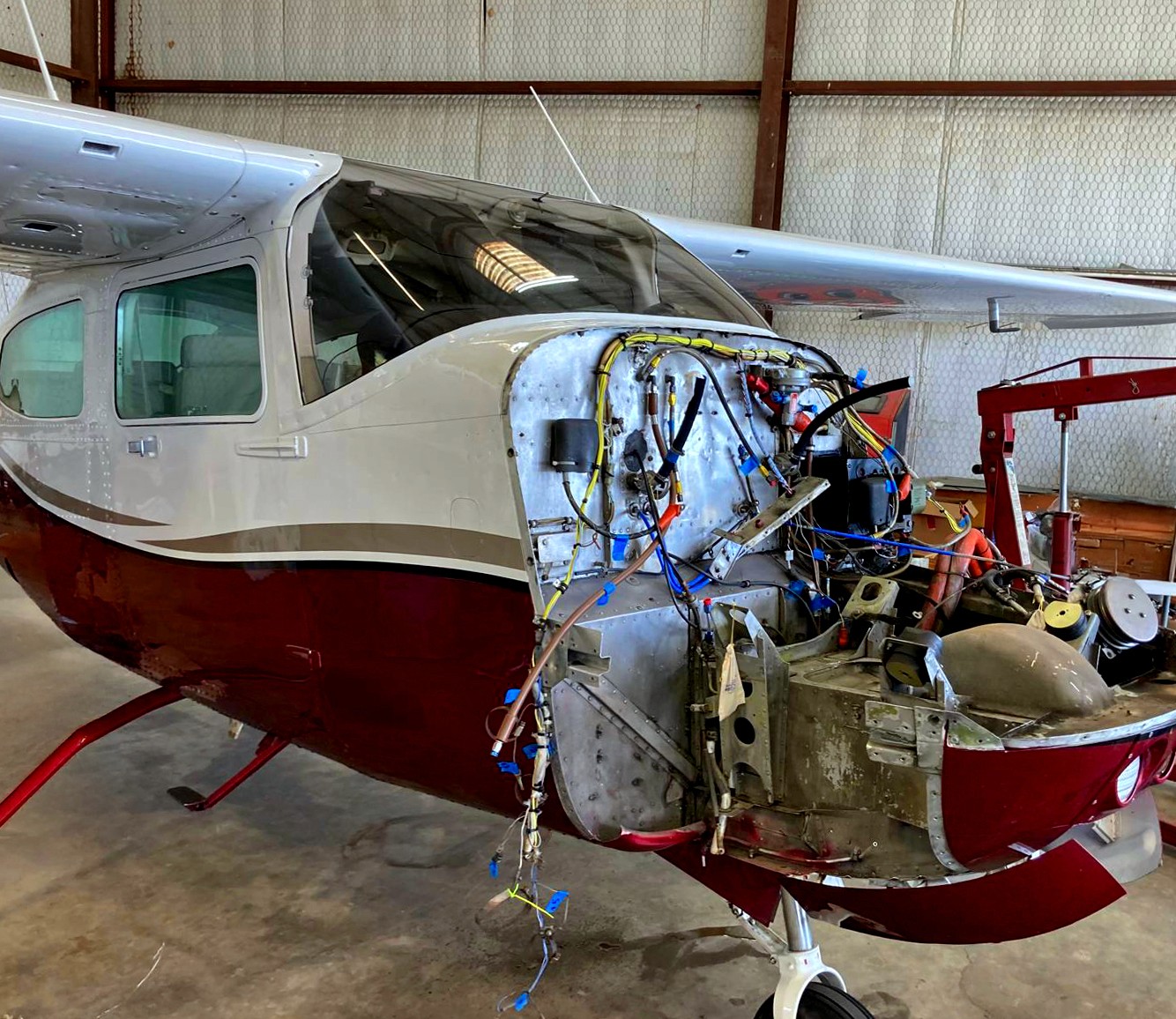
The Annual Inspection Process: Step by Step
The annual inspection process begins when you deliver your aircraft to a certified repair station or an FAA-approved mechanic. At East Texas Flying Service, we start with a thorough review of maintenance logs and a conversation about any issues you have noticed. The inspection follows a structured sequence defined by FAA regulations.
An A&P mechanic performs the work, with final review & sign-off from an A&P mechanic with Inspection Authorization (IA). The first step is a visual walk-around to check the airframe, wings, empennage, landing gear, and control surfaces. Next, the engine cowling comes off, and the propeller spinner is removed so the propeller can be inspected in place on the aircraft. All fluid lines, hoses, and clamps are inspected for wear. The aircraft inspection procedures also include removal of interior panels to access control cables, pulleys, and electrical wiring.
The mechanic documents each finding on an aircraft annual inspection checklist. Any discrepancy must be corrected before the aircraft returns to service. The entire process can take anywhere from two days to two weeks, depending on aircraft complexity and the condition of components.
What Is Checked During an Annual Inspection?
Owners frequently ask what gets checked during an annual inspection. The answer covers nearly every critical system on the airplane. The FAA requires adherence to the manufacturer's maintenance manual, plus compliance with all applicable airworthiness directives (ADs) and service bulletins.
Key areas inspected include:
• Engine and systems: Cylinder compression, spark plugs, oil filter cut-open analysis, magneto timing, fuel injectors, and carburetor. Each cylinder gets a compression test, where a reading below 60/80 typically triggers further investigation.
• Airframe: Corrosion inspection, skin cracks, rivet integrity, and structural attachment points.
• Landing gear: Tire condition, brake pads, strut seals, and wheel bearings.
• Propeller: Blade nicks, spinner cracks, and hub integrity.
• Avionics and electrical: Navigation lights, transponder certification, antenna bonding, and circuit breakers.
• Flight controls: Cable tension, pulley condition, control stops, and trim mechanisms.
The mechanic also reviews the logbook for incomplete inspections or overdue ADs. Every logbook entry must be signed off with the correct FAA reference. Missing signatures or outdated entries can delay the inspection while the mechanic researches prior maintenance history.
Aircraft Annual Inspection Checklist: Key Components
The aircraft annual inspection checklist is a standardized form that guides the IA through every required step. While variations exist by manufacturer, all checklists cover the same FAA-required elements.
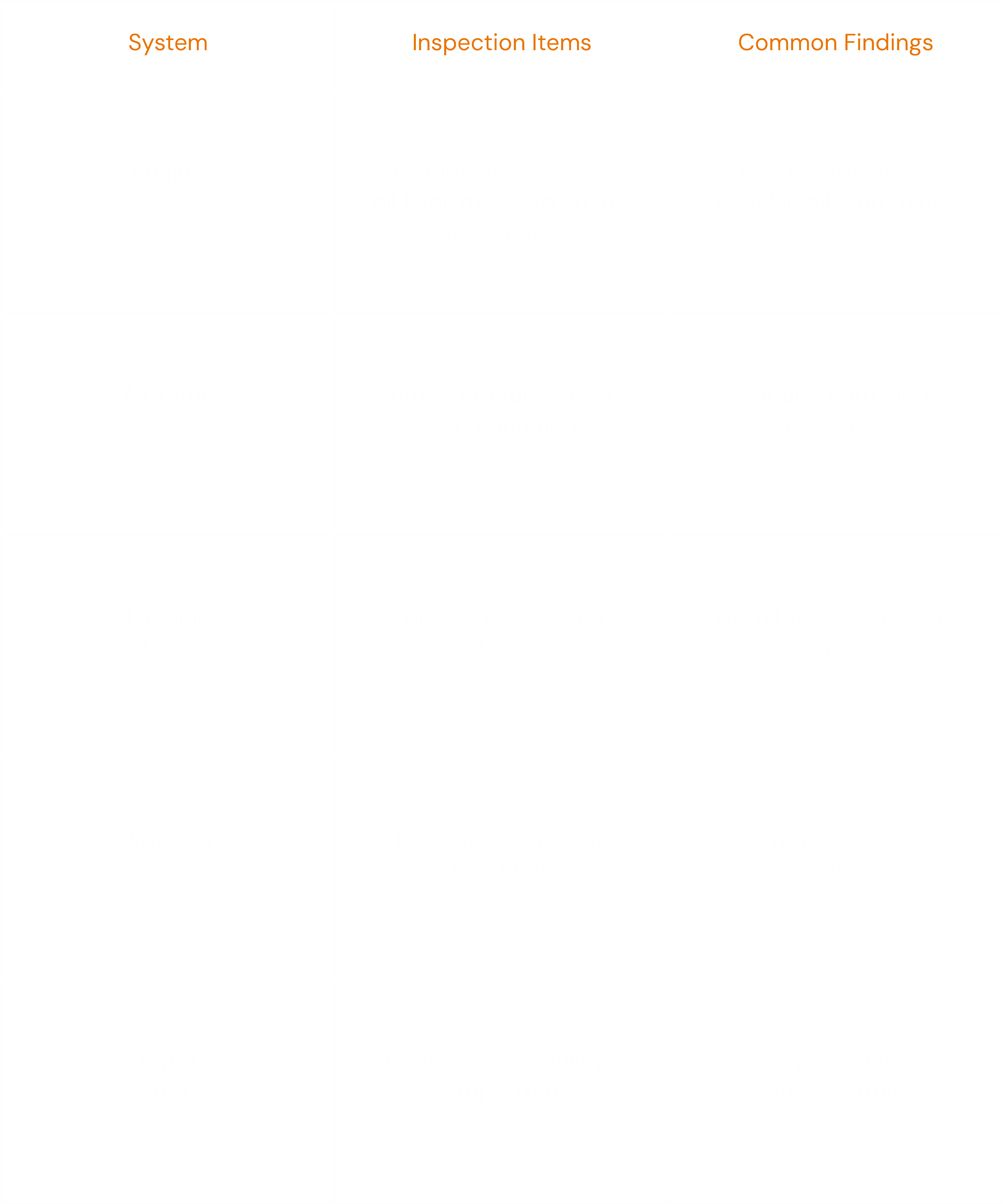
A thorough checklist reduces the chance of missing a critical inspection point. Many shops, including ours, use digital checklists that integrate with the maintenance tracking software. Owners who request an owner-assisted annual inspection can follow along with the checklist and perform non-critical tasks under supervision.
FAA Annual Inspection Rules and Compliance
The FAA annual inspection rules are outlined in 14 CFR Part 43, Appendix D. This regulation specifies the minimum scope of the inspection. The IA must certify that the aircraft is in an airworthy condition in the logbook to sign off the annual inspection; where there are discrepancies found, we will ensure that you are informed, and we will identify if this is an airworthiness issue and any associated cost to rectify so that you can make an informed decision about how to proceed.
If the aircraft does not pass, the IA will issue a list of discrepancies. The aircraft is grounded until all items are corrected and the IA signs off. In some cases, a special flight permit can be obtained to fly to a repair facility if major work is needed.
Staying current on FAA annual inspection rules helps you avoid enforcement actions. A violation not only grounds the aircraft but can also lead to fines of up to $1,000 per day until the issue is resolved. Our team at East Texas Flying Service stays up-to-date with the latest FAA guidance through factory training and IA renewal courses. We also offer annual inspection services that ensure full compliance.
Annual Inspection Costs and What They Include
Annual inspection costs vary by aircraft type, engine model, and the complexity of your plane.
The inspection fee usually covers the IA's time, but not the correction of discrepancies. If the mechanic finds worn brakes, a bad magneto, or corrosion, the parts and labor for repairs are billed separately. Owners who keep up with routine maintenance between annuals typically see lower unexpected costs.
Mobile aircraft repair services can also conduct annual inspections at your location. While we do offer mobile maintenance as an option, ferrying the aircraft to our shop will almost always come out cheaper than having us travel to you. Going mobile typically costs more because we must charge for tool-loading time and travel time, and the job invariably takes longer due to unforeseen parts or tools being needed off-site.
Pre-Buy Inspection vs Annual: Understanding the Difference
A common point of confusion is the pre-buy inspection vs annual distinction. A pre-buy is a thorough evaluation performed before purchasing an aircraft, and it is not an FAA-required event. An annual, on the other hand, is mandatory for continued airworthiness.
While a pre-buy can reveal many of the same issues as an annual, it may not follow the strict FAA checklist from Part 43 Appendix D. Some buyers ask the seller to complete a fresh annual as part of the transaction, ensuring the aircraft is fully airworthy at closing.
We offer both pre-purchase inspections and annual inspections, so you can choose the level of scrutiny that fits your situation. A pre-buy is especially important for high-value or older aircraft.
Annual Inspection Preparation Tips for Aircraft Owners
Start by reviewing the logbooks to ensure all previous inspections and AD compliance entries are current. A common issue is an incomplete AD log that causes the IA to stop work and research historical compliance. Clean the aircraft interior and exterior to make visual inspections easier, and remove all personal items from the cabin.
Gather any maintenance records, service bulletins, or modifications that have been installed. If you have been flying with a minor issue, describe it to the mechanic before they start. This helps them prioritize during the aircraft inspection procedures.
Prepare by checking obvious items like tire pressure, oil level, and cleanliness of the engine compartment. Some owners even create an engine top overhaul checklist if they suspect cylinder issues. The better you prepare, the fewer surprises you will face on the bill.
Frequently Asked Questions
How long does an aircraft annual inspection take?
Most single-engine aircraft inspections take two to five days. Complex aircraft or those needing extensive repairs can take one to two weeks. Scheduling during slower seasons can reduce wait time.
Can I fly my aircraft if the annual inspection is overdue?
No. Operating an aircraft without a current annual inspection violates FAA regulations and can result in enforcement action and fines.